If you fall asleep fine but wake up between 2 and 4 a.m. and cannot return to sleep, the problem is rarely sleep-onset machinery — it is usually elevated nocturnal cortisol. Ashwagandha is the most-studied adaptogen for this specific pattern, and the trial data is more robust than for most herbal sleep aids.
Mechanism — cortisol attenuation
Ashwagandha is an adaptogen — it modulates the hypothalamic-pituitary-adrenal axis, blunting cortisol spikes without flattening the rhythm entirely. Withanolides are the active compounds.
Elevated evening or nocturnal cortisol is the most common physiological driver of 2-4 a.m. wakings. Cortisol naturally rises in the second half of the night to prepare you to wake — but if it spikes too early or too high, you wake too soon and cannot get back to sleep. Lowering evening cortisol baseline addresses the root cause.
Evidence
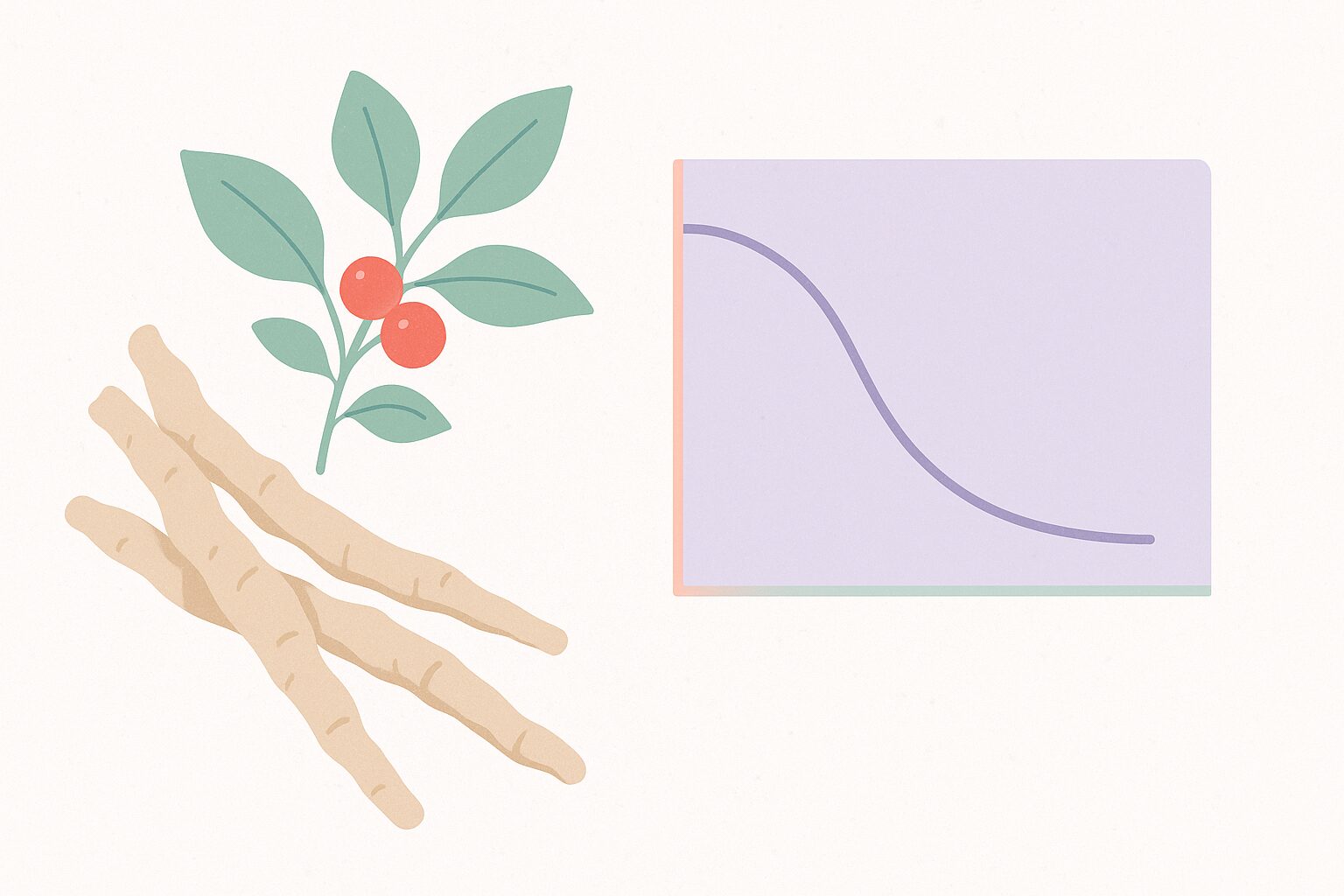
A 2019 RCT in stressed adults found 600 mg KSM-66 for 8 weeks reduced morning cortisol by ~28 percent and improved subjective sleep quality. Multiple later trials confirm the cortisol-lowering effect at 300–600 mg daily over 4–8 weeks.
Effect on sleep is indirect — through cortisol — so it works best when the underlying problem is HPA-axis activation, not classic sleep-onset insomnia.
Forms — KSM-66 vs Sensoril
KSM-66 is a root-only extract standardised to 5 percent withanolides — the most-studied form, with the most sleep and stress trial data.
Sensoril uses both root and leaf, standardised to a higher withanolide percentage. More potent at lower doses (125–250 mg) but slightly less studied for sleep. Both work; KSM-66 is the safer default choice.
Ashwagandha — pick the form that fits your goal
| Form | Dose | Best for |
|---|---|---|
| KSM-66 | 300–600 mg/day | Sleep + general stress (most studied) |
| Sensoril | 125–250 mg/day | Higher potency, cortisol focus |
| Generic root powder | 1–3 g/day | Cheaper but variable; less reliable |
Related reading: what is insomnia, 9 herbal sleep remedies.
Frequently Asked Questions
Should I take ashwagandha morning or night?
Morning is the default — you want to blunt the daytime cortisol curve. Some people split: 300 mg AM and 300 mg PM. Avoid right before bed (some report stimulating effects in sensitive individuals).
Who should NOT take ashwagandha?
People with autoimmune conditions (it may stimulate immune function), people on thyroid medication (interaction possible), pregnant women, and anyone on sedatives or anti-anxiety medications without guidance.
How long until I notice sleep changes?
Cortisol changes show within 2 weeks; sleep improvements typically appear at week 3–4 and plateau by week 8.