What you eat in the 6 hours before bed has more impact on sleep quality than most herbal interventions. The headline offenders — caffeine and alcohol — are well known. The underrated ones are sugar bombs, hidden stimulants, and late-night high-fat meals that push GERD to the surface.
The headline disruptors
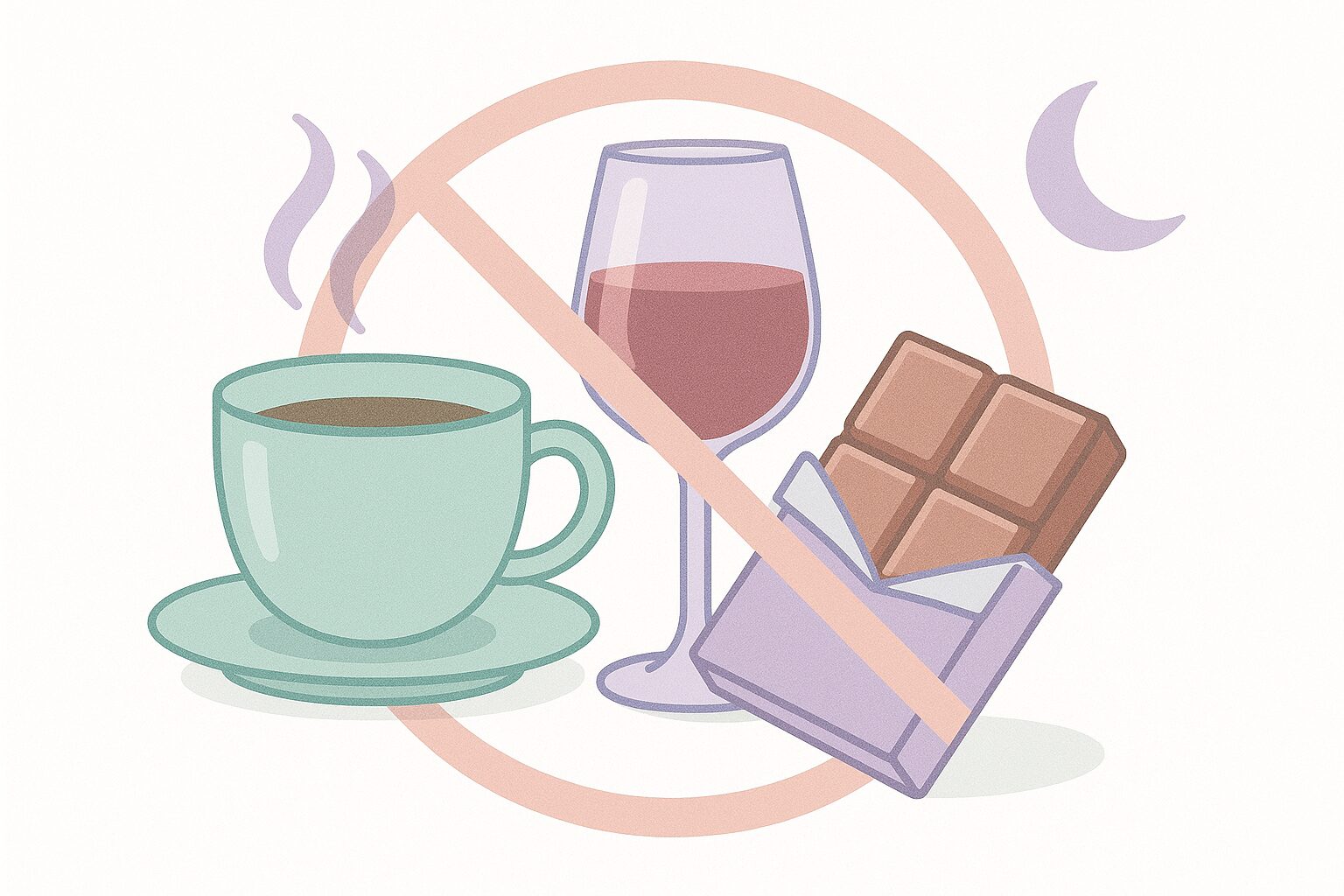
Caffeine: half-life 5–6 hours. Cutoff 2 p.m. for slow metabolisers, 4 p.m. for fast. Watch for hidden caffeine in dark chocolate (5–25 mg/oz), decaf coffee (2–15 mg/cup), tea, energy drinks, pre-workout, and some pain relievers.
Alcohol: sedates initially, then fragments sleep architecture in the second half of the night. Two drinks within 3 hours of bed reduce REM sleep by 25–30 percent. The 3 a.m. wide-eyed wakeup is the alcohol metabolism rebound.
Late high-fat or spicy meals: increase GERD likelihood, delay gastric emptying, and prevent the core temperature drop needed for sleep onset.
The underrated disruptors
Sugar bombs 60–90 minutes before bed: blood glucose spike followed by reactive hypoglycemia triggers a 2–3 a.m. cortisol surge and wakeup. Dessert is OK; a half-pint of ice cream is not.
MSG-heavy takeout: anecdotally produces sleep disruption in sensitive individuals. The mechanism is unclear but the pattern is consistent in self-reports.
Aged cheeses and cured meats contain tyramine, which can elevate blood pressure and trigger fragmented sleep in MAO-inhibitor users and possibly more broadly.
Excess fluid within 2 hours of bed: nocturia (waking to urinate) is one of the most common causes of fragmented sleep, particularly in adults over 50.
What to eat for better sleep
Tart cherries (Montmorency): contain plant-derived melatonin. A small glass of tart cherry juice 60 minutes before bed has modest trial evidence for sleep onset and quality.
Kiwi (2 fruits, 1 hour before bed): small trials show improved sleep quality, possibly via serotonin precursors.
Turkey, fatty fish, pumpkin seeds, nuts: tryptophan and magnesium sources that support melatonin synthesis.
Complex carbs at dinner: a small portion of slow-release carbs at dinner helps tryptophan cross the blood-brain barrier.
Sleep-disrupting foods vs sleep-supporting foods
| Avoid in evening | Choose instead |
|---|---|
| Coffee, energy drinks (after 2 p.m.) | Chamomile or lemon balm tea |
| Wine, beer, spirits (within 3 hr of bed) | Sparkling water with lemon |
| Pizza, fried foods (within 3 hr) | Light fish + veg dinner |
| Ice cream, candy (within 90 min) | Handful of tart cherries |
| Energy bars with caffeine | Greek yogurt + walnuts |
Related reading: natural sleep protocol, 9 herbal sleep remedies.
Frequently Asked Questions
Does drinking water before bed help or hurt?
Both. Sip enough to avoid dehydration; stop large volumes 2 hours before bed to avoid nocturia. Older adults are especially sensitive.
Is dark chocolate that bad?
An ounce after dinner is usually fine. Two ounces of 85 percent dark delivers 30+ mg caffeine — enough to wreck sensitive sleepers.
What about a glass of warm milk?
Modest evidence at best. Most of the calming effect is psychological ritual, not biochemistry. If it helps and you tolerate dairy, keep it.