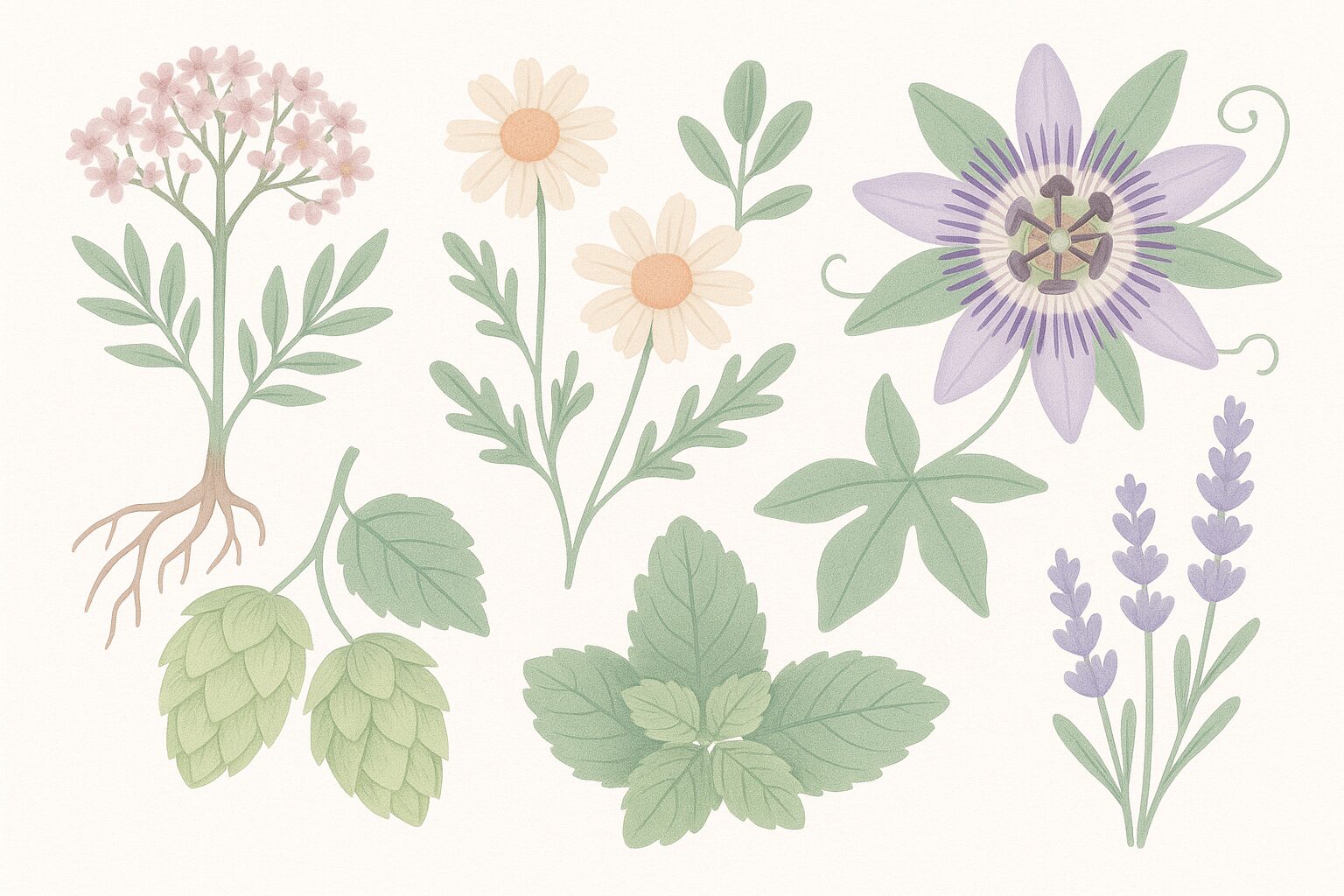
The herbal sleep aisle is crowded — and most of it is hype. Of the dozens of botanicals marketed for insomnia, only about nine have generated enough consistent clinical evidence to be worth your time and money. This guide ranks them by the strength of the human-trial data, the dose ranges shown to actually work, and the situations where each shines.
Tier 1 — strongest evidence (multiple RCTs)
1. Valerian root (Valeriana officinalis)
Valerian is the most-studied herbal hypnotic. A Cochrane-adjacent meta-analysis of 16 randomised trials found a modest but statistically meaningful improvement in subjective sleep quality and reduced sleep onset latency. Effects build over 2–4 weeks of nightly use — it is not a single-dose knockout. Standardised extracts of 300–600 mg, 30–60 min before bed. See our deep dive on valerian root dosing and side effects.
2. Chamomile (Matricaria recutita)
Chamomile contains apigenin, a flavonoid that binds GABA-A receptors weakly — the same site benzodiazepines hit, far less potently. RCTs in older adults and in postpartum women show improvements in sleep quality. Best as a 270–400 mg standardised extract, or two strong cups of tea steeped 10 minutes. Companion: chamomile and sleep research.
3. Passionflower (Passiflora incarnata)
Passionflower modestly raises GABA levels in animal models, and human trials (small but well-designed) show sleep-quality improvements comparable to low-dose benzodiazepines without next-day grogginess. Particularly useful when anxiety is driving the insomnia. See passionflower for anxiety-driven insomnia.
Tier 2 — promising but smaller evidence base
| Herb | Mechanism | Typical dose | Best for |
|---|---|---|---|
| Hops (Humulus lupulus) | GABA-A modulation; works best with valerian | 0.5–1 g extract | Sleep-maintenance |
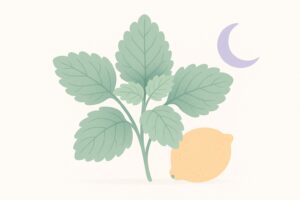
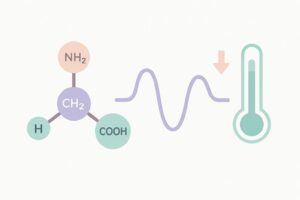
| Lemon balm (Melissa officinalis) | Inhibits GABA transaminase; mild anxiolytic | 300–600 mg | Restless, low-grade anxiety |
| Lavender (oral or aroma) | Linalool reduces autonomic arousal | 80 mg Silexan oral / inhaled oil | Tension-driven insomnia |
| Ashwagandha (Withania somnifera) | Lowers evening cortisol | 300–600 mg KSM-66 | Cortisol-driven 2 a.m. wakings |
| Magnolia bark (honokiol) | GABA-ergic, anxiolytic | 200–400 mg | Anxiety + sleep |
| California poppy | Mild sedative alkaloids | 200–400 mg tincture | Gentle nightcap |
How to layer herbs (and what NOT to combine)
A common evidence-based stack: chamomile or lemon balm tea 60 minutes before bed for parasympathetic priming, then 300–500 mg valerian (alone or with hops) 30 minutes before lights out. Add 300 mg ashwagandha in the morning if your wakings cluster at 2–4 a.m. — that pattern points to a cortisol problem, not a sleep-onset problem.
Realistic expectations
Even the best-studied sleep herbs produce moderate, not dramatic, effects — typical trial findings show 10–20 minutes faster sleep onset and meaningful but not transformative subjective improvements. They work best layered onto a solid sleep hygiene foundation. Build the routine first; see our natural sleep protocol for the step-by-step.
Frequently Asked Questions
Which herb works fastest?
Lavender inhaled aromatically and chamomile tea both produce noticeable calming within 20–30 minutes. Valerian effects build over 2–4 weeks. There is no herb that reliably matches a Z-drug in single-dose speed.
Can I take valerian every night long-term?
Most trials run 4–6 weeks; longer-term safety data is limited but reassuring. Periodic 1-week breaks are reasonable. Discontinue gradually if you have been using it nightly for several months.
Are gummies and ‘sleep blends’ worth it?
Usually no. Most multi-herb gummies under-dose every ingredient to fit the format. Single-extract capsules or strong teas deliver the doses the clinical trials actually used.
Sources & Further Reading
- NCCIH — Valerian fact sheet
- NCCIH — Sleep and CAM
- NIH Office of Dietary Supplements — Botanical Dietary Supplements
- Mayo Clinic — Insomnia self-care