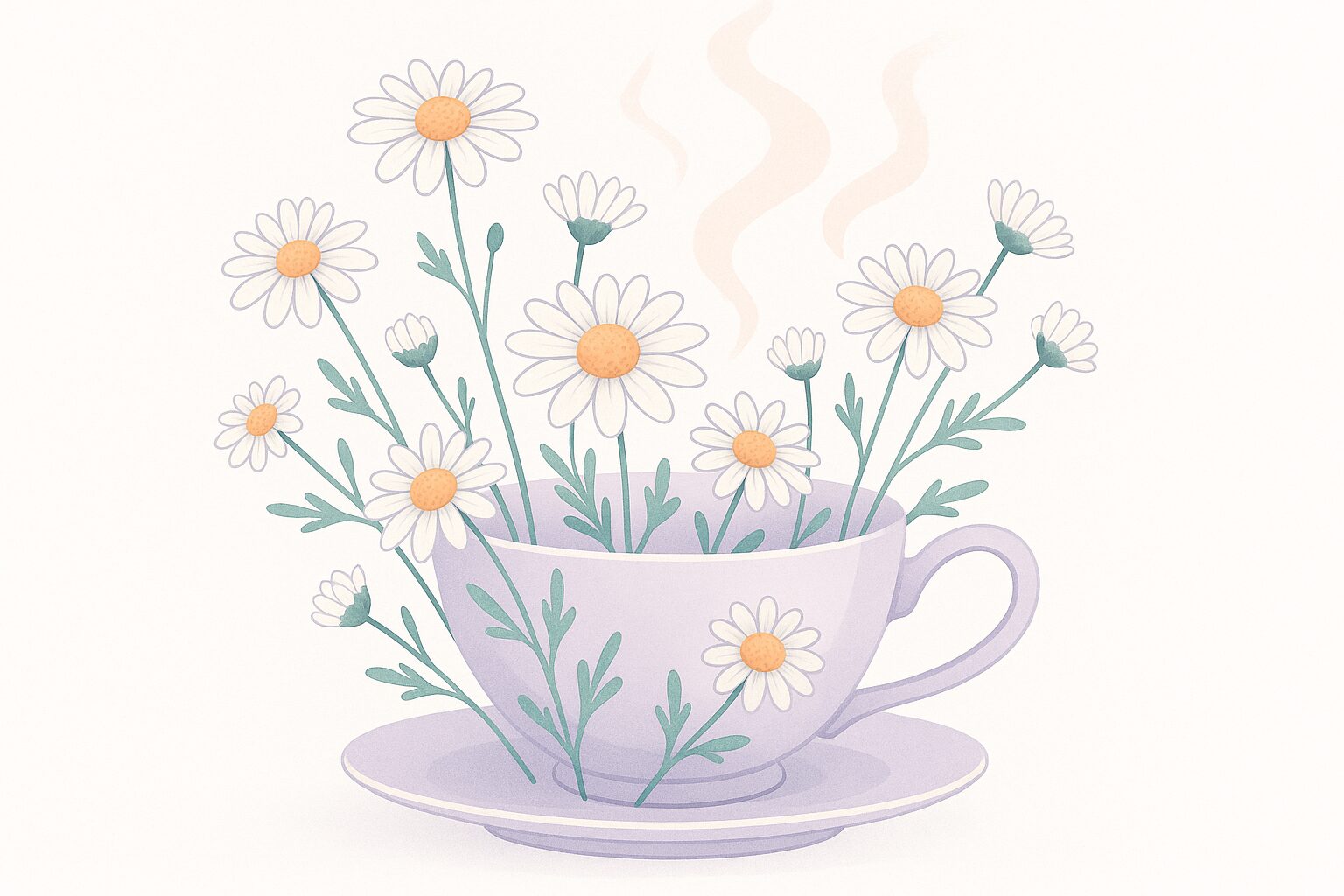
Chamomile is the most popular bedtime tea on Earth, but most cups are essentially flavoured hot water — the chamomile is under-dosed and under-steeped. Done right, it delivers a meaningful dose of apigenin, a flavonoid that binds GABA-A receptors weakly and has produced sleep-quality improvements in several randomised trials.
The active compound — apigenin
Apigenin is the flavonoid most associated with chamomile’s calming effects. It binds GABA-A receptors at the benzodiazepine site, but with far weaker affinity than a benzodiazepine — producing mild anxiolysis and sedation without dependence risk.
A standard chamomile teabag contains roughly 0.8–1.2 percent apigenin by dry weight. Two strong cups (one teabag each, 10 minutes covered) supply a clinically meaningful dose.
Clinical evidence
A frequently cited Iranian RCT in elderly nursing-home residents found 200 mg chamomile extract twice daily produced significant improvements in sleep quality vs placebo over 28 days. A separate trial in postpartum women with sleep quality complaints found similar improvements with daily chamomile tea over 2 weeks.
Effects in healthy young adults are weaker and less consistent. Chamomile appears most useful for sleep complaints linked to mild anxiety or age-related sleep changes rather than severe insomnia.
How to brew it correctly
Most people under-extract chamomile. Use 2 teabags or 2 heaped teaspoons of loose flowers per cup, cover the cup with a saucer to trap the volatile oils, and steep for 10 full minutes — not 2 or 3. The cover matters; without it the most calming aromatic compounds evaporate.
Drink 60–75 minutes before bed. Earlier than that and the diuretic effect produces a 3 a.m. bathroom trip; later and you have not yet absorbed the apigenin by lights-out.
Chamomile delivery methods compared
| Form | Apigenin dose | Convenience | Best use case |
|---|---|---|---|
| Standard teabag (1, 5 min) | Sub-clinical | Easiest | Ritual, not therapeutic |
| Strong tea (2 bags, 10 min covered) | Meaningful | Easy | Mild sleep complaints |
| Loose-leaf strong infusion | Higher | Moderate | Best taste + dose ratio |
| Standardised extract 200–400 mg | Reliable | Capsule | Daily routine, anxiety overlap |
Related reading: 9 herbal sleep remedies, natural sleep protocol.
Frequently Asked Questions
Is chamomile safe daily?
Yes for most healthy adults. People allergic to ragweed, daisies, or other Asteraceae-family plants may cross-react. Avoid in pregnancy at extract doses — tea is generally considered safe in moderation.
Does chamomile interact with medications?
It can mildly potentiate warfarin (anticoagulant) — discuss with your doctor if you are on one. Also caution with sedatives.
Roman vs German chamomile — which one?
Most clinical research uses German chamomile (Matricaria recutita). Roman chamomile (Chamaemelum nobile) has a different active profile and less sleep evidence.