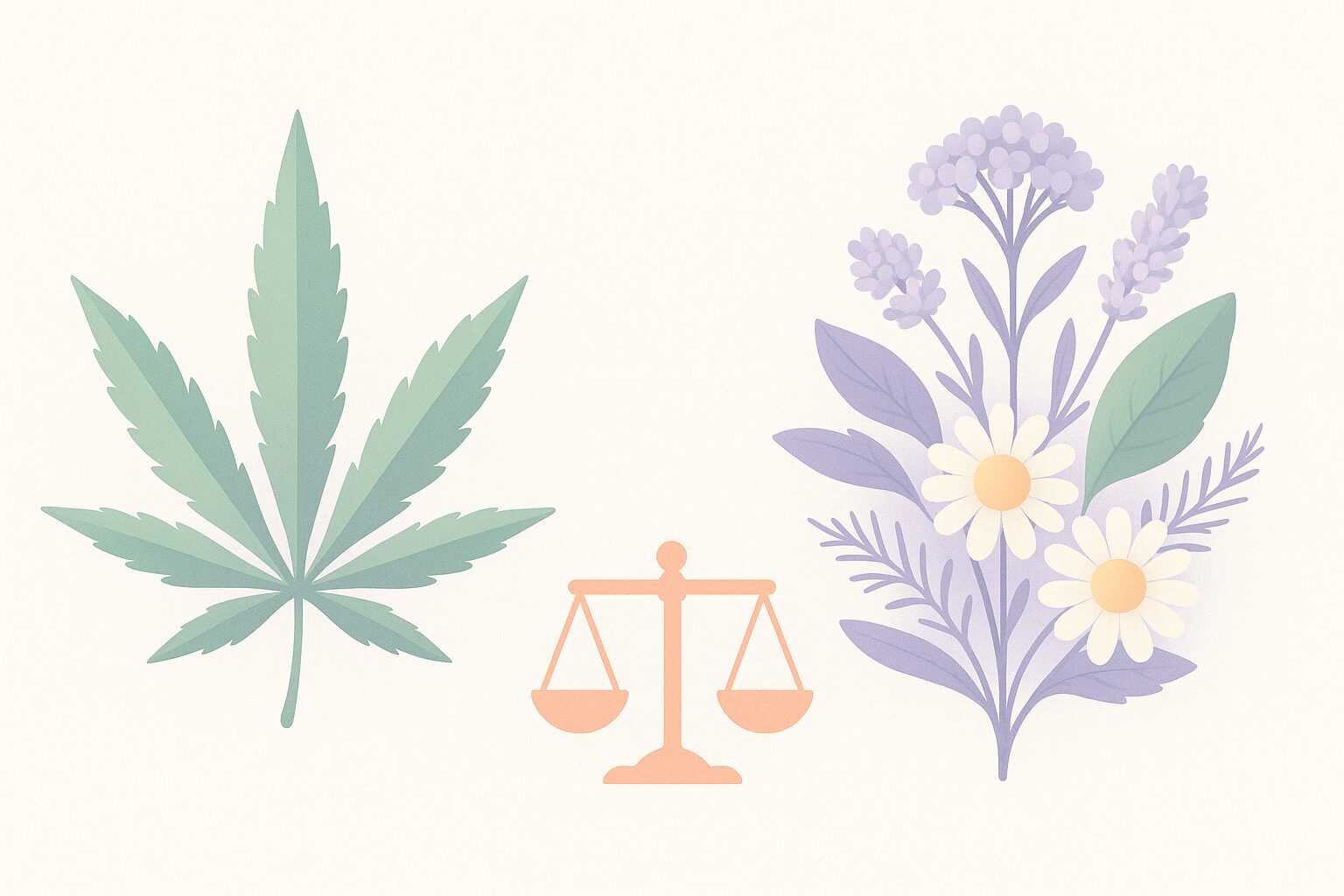
Cannabidiol (CBD) has been marketed aggressively for sleep, but the clinical evidence is messier than the marketing suggests. The current best summary: CBD has clear evidence for anxiety reduction and some evidence for sleep improvement at higher doses, but for primary insomnia it does not outperform the better-studied botanicals on a cost or effect-size basis.
What CBD actually does
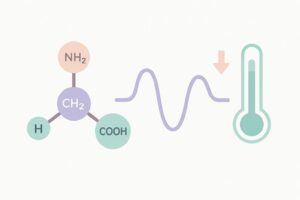
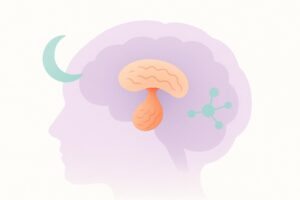
CBD interacts with the endocannabinoid system primarily as a CB1/CB2 indirect modulator and via serotonin 5-HT1A receptors. The clearest physiological effect is anxiolysis at doses of 25 mg and above. Sleep improvement appears largely secondary to anxiety reduction.
Unlike THC, CBD does not produce sedation directly — it does not ‘knock you out’. Effects on sleep architecture are modest.
Evidence
A 2019 retrospective study (Shannon et al.) in adults with anxiety and sleep complaints found 25 mg CBD daily for 1 month improved both anxiety and subjective sleep quality. Higher-quality RCTs are limited and findings are mixed for primary insomnia.
FDA-approved indication for cannabidiol (Epidiolex) is paediatric seizure disorders, not sleep — the sleep claims are based on weaker evidence.
CBD vs herbal sleep aids head-to-head
For sleep-onset insomnia: valerian-hops is better-evidenced and cheaper.
For anxiety-driven insomnia: passionflower or oral lavender Silexan have comparable evidence at lower cost than effective-dose CBD.
For chronic insomnia with anxiety co-morbidity: CBD at 25–75 mg is reasonable to try if cost is not a barrier and other approaches have failed.
CBD vs herbal sleep aids — quick comparison
| Concern | Best evidence-based pick |
|---|---|
| Cost-sensitive | Chamomile, valerian |
| Sleep onset only | Valerian or valerian-hops |
| Sleep maintenance (2-4 a.m. wakings) | Ashwagandha + valerian-hops |
| Anxiety-driven | Passionflower, lavender, then CBD |
| Refractory to everything else | CBD at 25-75 mg, with prescriber |
Related reading: 9 evidence-based herbal sleep remedies, passionflower for anxiety-driven insomnia.
Frequently Asked Questions
Are gummies as effective as oil?
Oils absorb faster (sublingual). Gummies have to pass through digestion and have lower bioavailability. Check the actual CBD content per piece — many gummies are sub-clinical at 5–10 mg.
Will CBD show on a drug test?
Pure CBD should not. Full-spectrum products contain trace THC and have produced positive tests. Use broad-spectrum or isolate if testing is a concern.
Drug interactions?
Yes — CBD inhibits CYP3A4 and CYP2C19. Significant interactions with blood thinners, antiepileptics, and many psychiatric medications. Discuss with your prescriber.