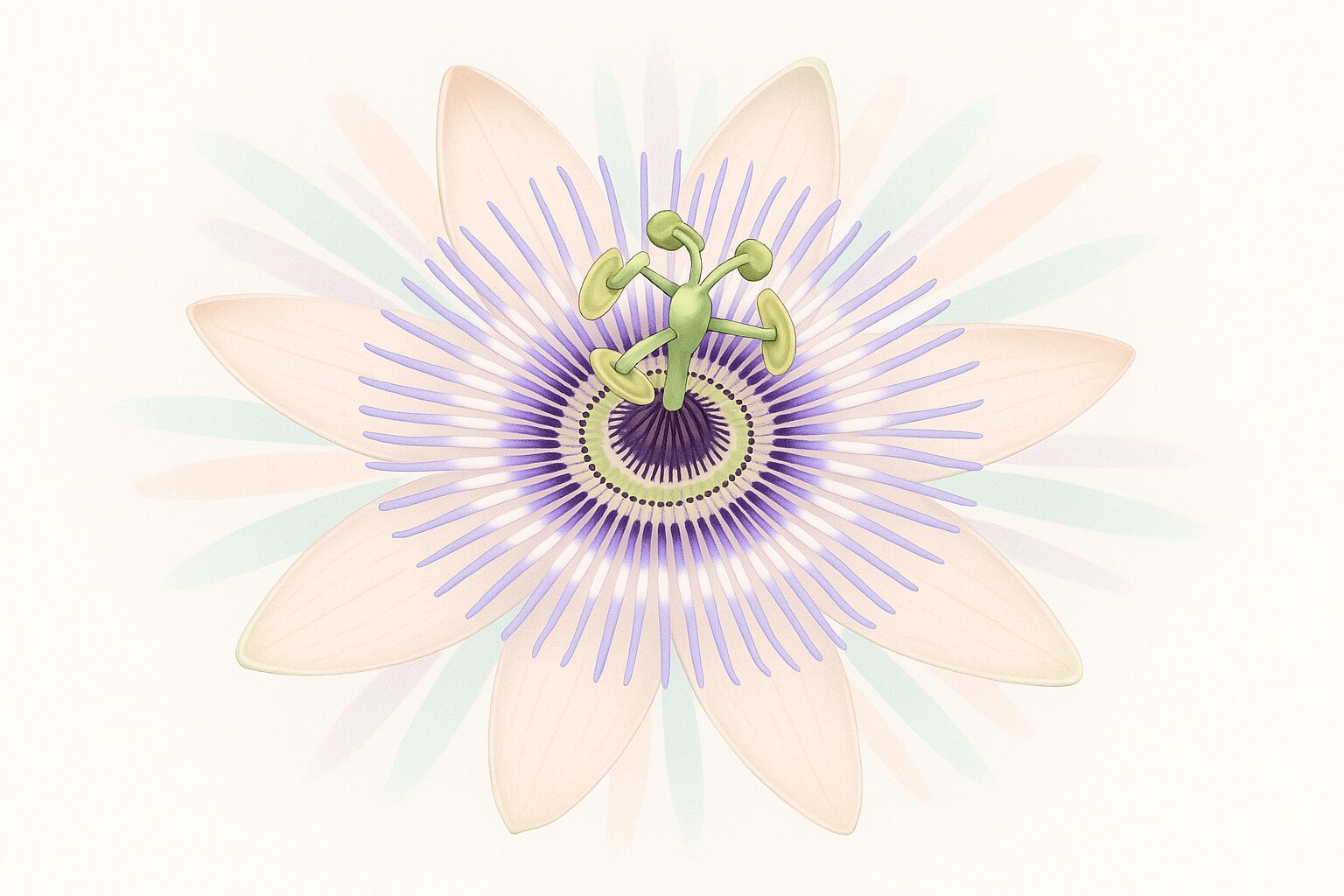
Passionflower has a niche that few other sleep herbs serve as well: people whose insomnia is downstream of anxiety. By gently raising GABA levels it reduces the racing-mind component that keeps sleep-onset insomniacs awake, and unlike benzodiazepines it does so without next-day cognitive impairment.
Mechanism
Animal studies show passionflower inhibits GABA transaminase, the enzyme that breaks down GABA. The net effect is a mild rise in inhibitory tone — calming without sedation. Flavonoids including chrysin and benzoflavone may contribute to anxiolytic effects.
Compared with valerian, passionflower has a more anxiolytic and less directly hypnotic profile. People often pair them: passionflower for the anxious mental noise, valerian for the body-level sleep onset.
Clinical evidence
A 2011 Australian RCT in adults with mild sleep complaints found one cup of passionflower tea for one week produced significant improvements in sleep quality versus placebo. Earlier surgical-anxiety trials showed it reduced pre-operative anxiety comparable to low-dose midazolam without affecting psychomotor function.
Trials are smaller and shorter than valerian’s, but the signal is consistent and side effects are minimal.
How to use it
Tincture: 1–2 ml in water, 30 min before bed.
Tea: 1 tablespoon dried herb, steep 10 minutes covered, drink 60 min before bed. Pairs well with chamomile in equal parts.
Capsule: 500 mg standardised extract, 30–60 min before bed.
Passionflower combinations
| Stack | Best for | Notes |
|---|---|---|
| Passionflower + chamomile tea | Mild evening anxiety | Gentle entry-level |
| Passionflower + valerian capsule | Anxiety + body restlessness | Synergy on both axes |
| Passionflower + lavender inhalation | Pre-bed wind-down | Layered sensory cues |
| Passionflower + ashwagandha (morning) | Anxiety with cortisol-driven wakings | Day + night strategy |
Related reading: 9 herbal sleep remedies, chamomile tea benefits.
Frequently Asked Questions
Is passionflower habit-forming?
No evidence of tolerance, dependence, or withdrawal. It is a much milder molecule than a benzodiazepine.
Can I take it during the day?
Yes for daytime anxiety, but at lower doses (200–300 mg). Most people find it too sedating for work hours.
Interactions to know about?
Avoid combining with benzodiazepines, Z-drugs, alcohol, or other sedatives. May potentiate anticoagulants — discuss with prescriber.