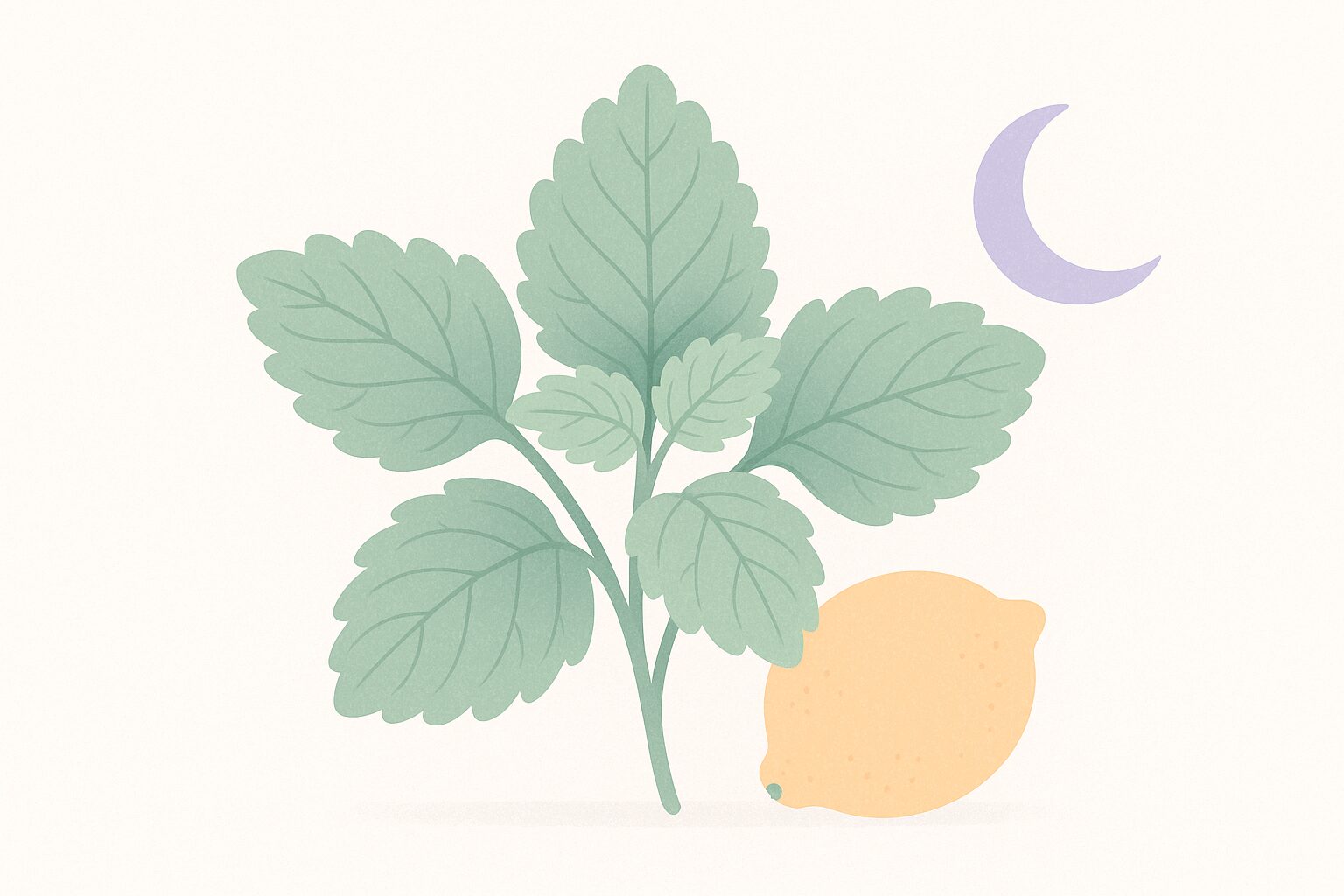
Lemon balm (Melissa officinalis) is a gentle, lemon-scented mint with a calming reputation going back to Roman herbal medicine. Modern trials support its use for mild anxiety and restless sleep — particularly the kind of low-grade evening agitation that prevents sleep onset without being severe enough to call anxiety.
Mechanism
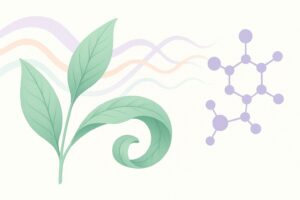
Lemon balm contains rosmarinic acid and triterpenes that inhibit GABA transaminase — the enzyme that breaks down GABA. The net effect is elevated inhibitory tone, producing calm without sedation.
Aroma compounds (citral, citronellal) also contribute via the same olfactory-limbic pathway as lavender, which is why a strong cup of lemon balm tea feels calming within 10–15 minutes.
Evidence
A 2011 trial combining lemon balm with valerian found significant improvements in sleep quality and reduced restlessness vs placebo. Other studies show anxiolytic effects at doses of 600 mg in stressed adults.
Trial data is smaller than for valerian or chamomile, but the safety profile is excellent and effects are reliable for mild cases.
How to use it
Tea: 1–2 teaspoons dried herb per cup, steep 10 minutes covered, drink 60 minutes before bed. Excellent paired with chamomile in equal parts.
Extract capsule: 300–600 mg standardised. Look for products marked as Cyracos or similar standardised extracts.
Tincture: 2–3 ml in water 30 minutes before bed.
Lemon balm stacking partners
| Combine with | Effect | Best for |
|---|---|---|
| Valerian | Synergistic sedation | Sleep onset insomnia |
| Chamomile (tea) | Additive calm | Mild evening anxiety |
| Passionflower | Stronger anxiolytic effect | Anxiety-driven insomnia |
| L-theanine | Relaxed alertness wind-down | Racing-mind insomnia |
Related reading: valerian root deep-dive, chamomile and sleep.
Frequently Asked Questions
Is lemon balm safe with medications?
Caution with thyroid medications — it may interfere. Avoid combining with sedatives. Generally well tolerated otherwise.
Can I grow it myself?
Yes — it grows aggressively and the fresh leaves make excellent tea. Crush leaves between fingers before steeping to release oils.
Will it make me drowsy during the day?
Usually not at low doses (200–400 mg). Higher doses or strong tea can be mildly sedating in sensitive individuals.