Lavender (Lavandula angustifolia) is one of the few aromatherapy interventions with credible clinical evidence for sleep. The active compound linalool reduces sympathetic arousal — measurable as lower heart rate, blood pressure, and cortisol within 15–20 minutes of inhalation.
How lavender works
Linalool, the dominant terpene in lavender oil, binds to NMDA and GABA-A receptors and reduces sympathetic nervous system tone. Inhaled linalool reaches the bloodstream within minutes via the nasal-pulmonary route, producing measurable drops in heart rate, blood pressure, and salivary cortisol.
Oral lavender (the Silexan formulation specifically) crosses into the central nervous system and has produced anxiety reductions comparable to low-dose lorazepam in head-to-head trials, with knock-on sleep benefits.
Clinical evidence
Inhalation trials: studies in ICU patients, college students with sleep complaints, and post-cardiac-surgery patients consistently show modest improvements in subjective sleep quality and reduced anxiety. Effect sizes are small but real and side-effect-free.
Oral Silexan: multiple placebo-controlled trials in generalised anxiety disorder show meaningful improvements at 80 mg daily over 6–10 weeks, with sleep quality improving as anxiety drops.
Practical setup
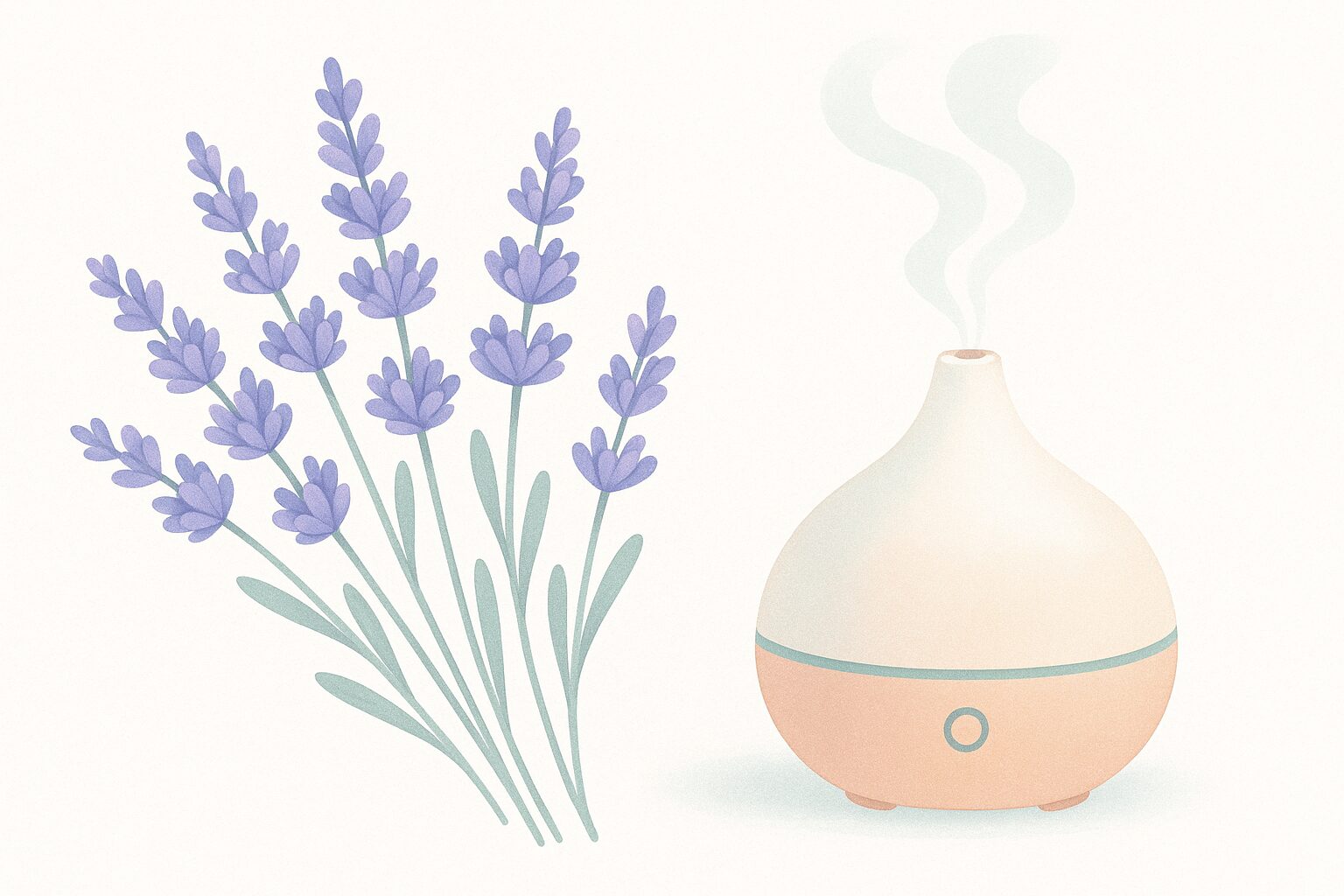
Diffuser: 4–6 drops in water-based diffuser, run 30 minutes before bed and the first 30 minutes of sleep. Cheaper and more effective than expensive ‘aromatherapy machines’.
Pillow spray or 2 drops on a tissue inside the pillowcase work equally well for most people. Direct skin application of undiluted oil can cause contact dermatitis — dilute in carrier oil if applying topically.
Quality matters. Look for ‘Lavandula angustifolia’ or ‘true lavender’ on the label. Avoid ‘lavandin’ or unspecified ‘lavender oil’ — these are cheaper hybrids with different chemistry.
Lavender delivery methods
| Method | Onset | Best for |
|---|---|---|
| Diffuser (4–6 drops) | 10–15 min | Whole-room evening priming |
| Pillow spray / drops | 10–15 min | Direct-zone, travel |
| Warm bath (5–8 drops) | 20–30 min | Pre-bed wind-down |
| Oral Silexan 80 mg | Builds over 2–4 weeks | Anxiety-driven insomnia |
Related reading: 9 herbal sleep remedies, passionflower for anxiety-driven insomnia.
Frequently Asked Questions
Is lavender oil safe for kids and pets?
Use cautiously around young children — undiluted inhalation can irritate airways. Cats can be sensitive to essential oils generally; consult a vet.
Can I be allergic to lavender?
Yes. Contact dermatitis from topical application is the most common reaction. Patch-test first if applying to skin.
Does lavender tea work?
Lavender tea is gentle and pleasant but delivers much lower linalool exposure than inhalation. Useful as ritual, not the main intervention.