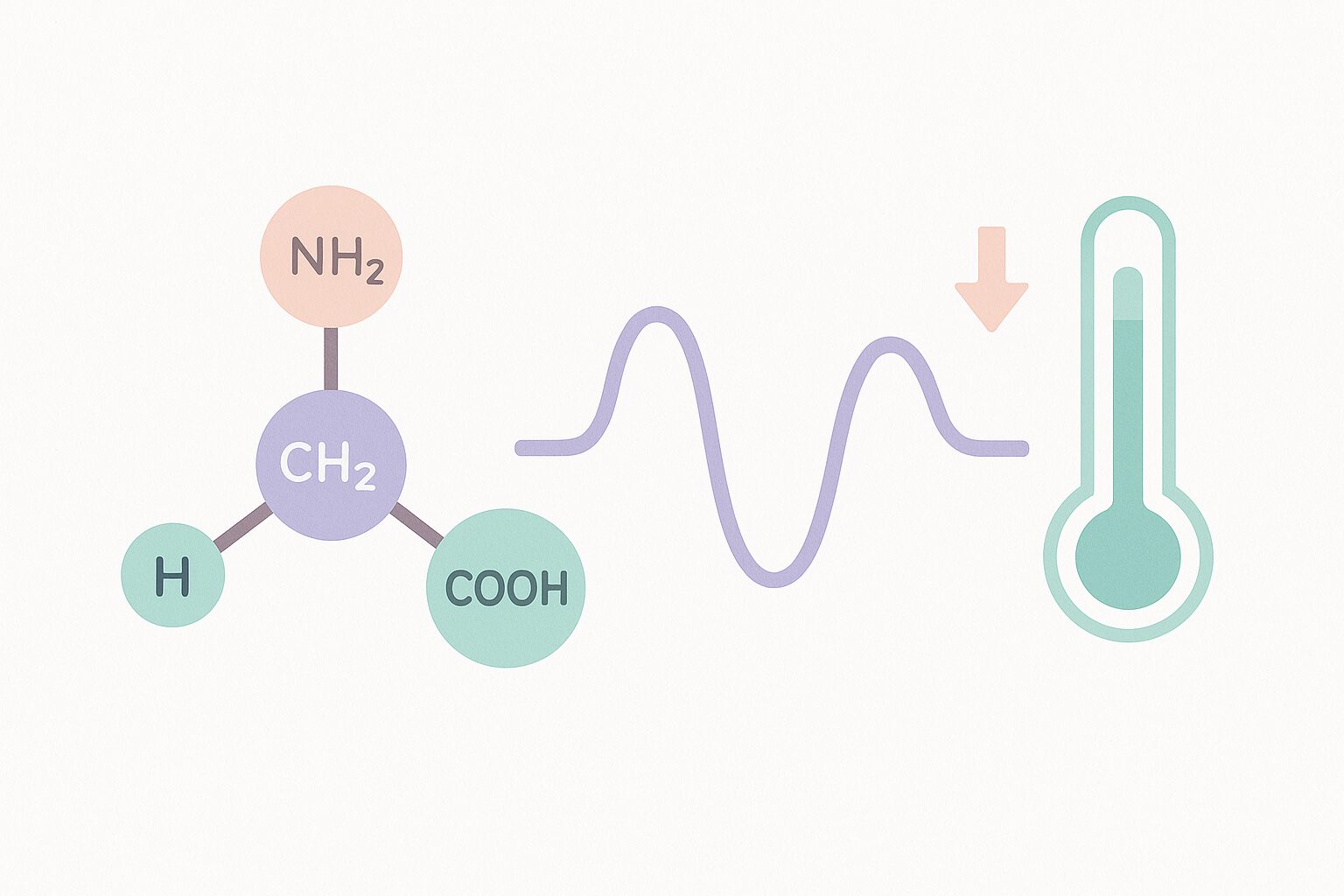
Glycine is an unsexy amino acid that does something unusual for a sleep supplement — it lowers core body temperature by vasodilating peripheral capillaries, which is one of the physiological prerequisites for sleep onset. Japanese researchers have published the cleanest trial data, consistently showing improved subjective sleep quality.
Mechanism — the temperature angle
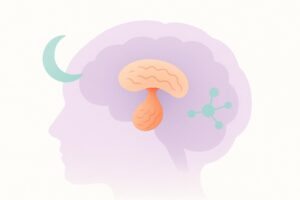
Glycine acts on NMDA receptors and seems to trigger peripheral vasodilation, which dumps heat from your core to your extremities. This is the same thermoregulatory shift that normally happens at sleep onset — glycine assists rather than triggers it.
Polysomnography in glycine trials shows reduced sleep onset, improved sleep efficiency, and increased slow-wave (deep) sleep — particularly valuable for people who feel unrested despite hitting their hours.
Evidence
Japanese trials at 3 g taken before bed consistently show improved subjective sleep quality, reduced daytime sleepiness, and improvements in cognition the following day. Effects appear within the first night or two, unlike valerian which builds.
Effect size is modest but reliable, and the safety profile is excellent — glycine is a normal dietary amino acid, food-grade.
How to take it
Pure glycine powder, 3 g (about 1 teaspoon), dissolved in water 30–60 minutes before bed. The taste is mildly sweet — palatable as-is.
Sometimes combined with magnesium glycinate, which delivers both magnesium and a glycine bolus in one capsule. The free glycine dose from magnesium glycinate at typical 200–400 mg magnesium doses is small (roughly 800–1600 mg glycine) — useful but below the 3 g trial dose.
Glycine vs other sleep aids — when it shines
| Sleep complaint | Glycine fit |
|---|---|
| Wakes feeling unrested despite full hours | Excellent |
| Slow sleep onset | Good (works first night) |
| Cannot stay asleep | Modest |
| Anxiety-driven | Limited |
Related reading: magnesium for sleep, 9 herbal sleep remedies.
Frequently Asked Questions
Will glycine make me cold?
Some users feel a mild warm-then-cool flush as peripheral vasodilation kicks in. This is the intended mechanism, not a side effect.
Can I take more than 3 g?
Trials cap at 3 g; higher doses do not improve sleep further. Very high doses (15+ g) can cause GI upset.
Glycine vs L-tryptophan?
Different mechanisms. Tryptophan boosts serotonin/melatonin; glycine works on thermoregulation and NMDA. Both can be combined, but few head-to-head trials exist.
Sources & Further Reading
- NIH ODS — Amino acids and dietary supplements
- NCCIH — Sleep and CAM
- Mayo Clinic — Insomnia diagnosis & treatment