Most sleep advice online is a buffet — 47 tips, none ranked. This protocol is a ranked sequence: the highest-leverage behaviours first, the marginal optimisations last. Implement them in this order over two weeks and you will see what is actually moving the needle in your specific case.
The 90-minute pre-sleep window — what to do in order
| Time before bed | Action | Why it works |
|---|---|---|
| T-90 min | Dim all overhead lighting; switch to warm lamps < 50 lux | Allows melatonin onset (suppressed above ~80 lux) |
| T-75 min | Chamomile or lemon balm tea, hot | Parasympathetic priming + raises then drops core temp |
| T-60 min | Last screen — phone in another room | Removes blue light and dopaminergic input |
| T-45 min | Warm bath or shower (10 min) | Post-bath cooling triggers sleep-onset thermoregulation |
| T-30 min | Valerian/hops capsule (if using) | Peak plasma at lights out |
| T-15 min | Reading (fiction, paper book) in dim light | Cognitive shift away from worry; passive engagement |
| T-0 | Bedroom 17–19 °C, blackout, white noise | Optimal thermal + sensory conditions |
Anchor 1 — wake at the same time every day (yes, including weekends)
Of every sleep intervention with RCT evidence, fixed wake time has the largest effect size on chronic insomnia. It anchors your circadian rhythm against your actual schedule. Vary bedtime if you must; never vary wake time by more than 30 minutes. Within 10 days your body will start producing sleep pressure at a predictable evening hour.
Anchor 2 — 10 minutes of morning sunlight, eyes open, no sunglasses
Direct outdoor light within 30 minutes of waking sets the master clock in your suprachiasmatic nucleus and gates evening melatonin release roughly 14–16 hours later. Indoor light at 100–300 lux is 100–1000× weaker than overcast outdoor light. There is no supplement that substitutes for this — only the morning sun does.
Anchor 3 — caffeine cutoff at 2 p.m.
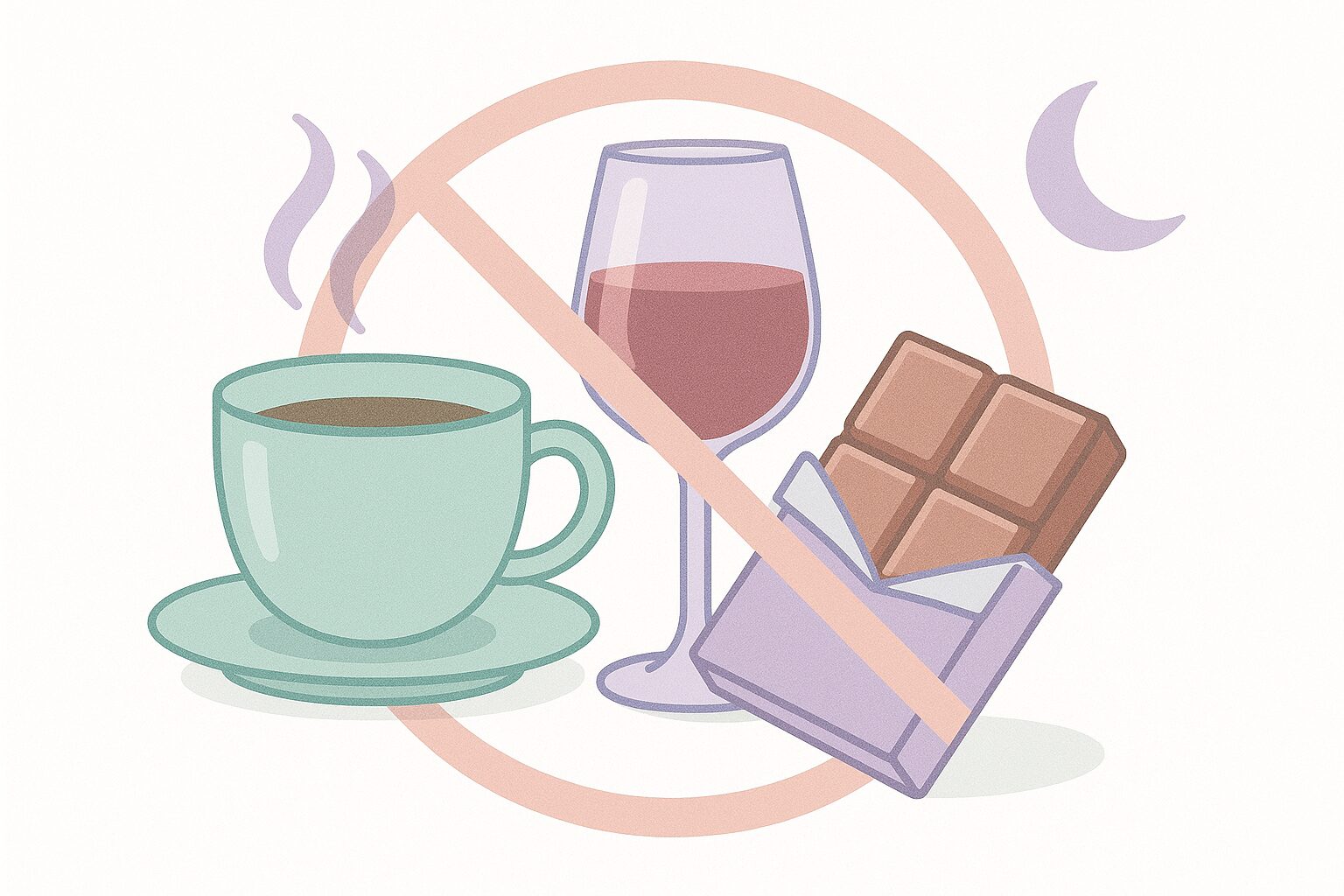
Caffeine has a half-life of 5–6 hours and a quarter-life of 10–12 hours. A 200 mg espresso at 4 p.m. still has 50 mg working in your bloodstream at midnight, blocking adenosine receptors and degrading deep sleep even if you fall asleep on time. Genetic slow-metabolisers (about 50 percent of the population) need to push the cutoff back to noon.
Anchor 4 — bedroom 17–19 °C, dark, quiet
Core body temperature must drop about 1 °C for sleep onset and stay low through the first half of the night. A bedroom above 20 °C fights this. Eyemask, blackout curtains, and either silence or steady white/brown noise complete the sensory shutdown.
Layer the herbs once anchors are in place
Now and only now do supplements earn a slot. Read our evidence-based herbal sleep guide for the nine herbs worth your money, and the deep-dive posts on each. Most people land on a chamomile-tea-plus-valerian-capsule combination, with ashwagandha added in the morning if cortisol-driven 2 a.m. wakings are the issue.
Two-week implementation schedule
- Days 1–3: lock in fixed wake time and morning light. Nothing else changes yet.
- Days 4–6: add caffeine cutoff at 2 p.m. and bedroom thermostat to 18 °C.
- Days 7–9: build the 90-minute pre-sleep window. No screens after T-60.
- Days 10–14: introduce ONE herb (start with chamomile tea). Add valerian on day 12 if onset is still slow.
- Day 14: review sleep diary. Score onset latency, wake count, and morning energy 1–10.
Frequently Asked Questions
Should I use a sleep tracker?
Optional and double-edged. A wearable can catch patterns (e.g. low HRV the night after alcohol) but produces anxiety in some users — orthosomnia. Use one for 2 weeks to learn your baseline, then put it away.
What if I cannot fall asleep within 20 minutes?
Get up. Sit in dim light, read fiction, return when sleepy. Staying in bed awake conditions the brain to associate the bed with wakefulness — the central error this protocol is designed to undo.
How long until I see results?
Anchor effects show within 7–10 days. Full protocol benefit at 3–4 weeks. Herbal additions take an extra 1–3 weeks of nightly use to plateau.
Sources & Further Reading
- NCCIH — Sleep and CAM
- Mayo Clinic — Sleep tips
- CDC — Sleep and Sleep Disorders
- National Sleep Foundation — Sleep duration consensus